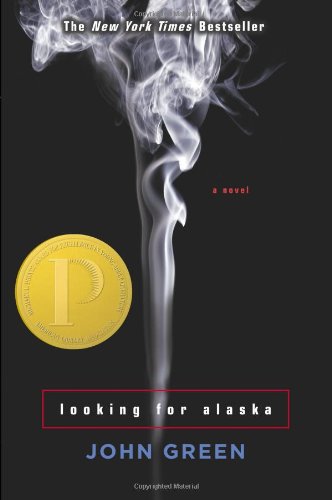
What I Liked: The two key friends Miles makes are interesting characters, the boarding school life and pranks are entertaining,
What I didn't like: I almost didn't read the book after the first chapter. While the premise of a Great Perhaps was intriguing, the main character was not ... and he doesn't improve. His friends were more interesting and I felt surprised whenever he spoke or had an opinion because he was such a passive character.
The philosophical ending lost me. I don't know if I just couldn't think deeply, or just didn't care - but the character's conclusion at the end sounded like a typical kid: a big disconnected and not fully thought through, and little to "out there". In short - lame.
What I wished I read: I'm not sure - maybe for the character to be more of a character. I'm not exactly sure how that could be: maybe if actually initiated any of the action in the story.
Quotes (spoiler): "And what is an 'instant' death anyway? How long is an instant? Is it one second? Ten? The pain of those second must have been awful as her heart burst and her lungs collapsed and there was no air an no blood to her brain and only raw panic. What the hell is instant? Nothing is instant. Instant rice takes five minutes, instant pudding an hour. I doubt that na instant of blinding pain feels particularly instantaneous."
Something I noticed - the story was published in 2005, but it didn't feel that way - maybe because no one had cell phones. I read at the end that the author went to boarding school and it seemed to explain why the stories atmosphere/setting didn't feel like present day.
Lastly - the book won quite a few awards in 2005 and 2006 and, well, I'm just not seeing it.

No comments:
Post a Comment